Joshua Tree National Park is known for its many Gold Rush-era mines dispersed throughout the vast desert park. In the 1840’s Americans and immigrants alike headed west in search of fortunes to be found in the rocky desert landscape. Such things conjure up images of the Wild West at its peak. However, despite that peak passing many years ago, the features of the pioneer lifestyle did not fade away so quickly. In 1929 the US stock market saw an unprecedented crash that led many to seek financial opportunities through less conventional means for the time.
Naturally, the volatile economic circumstances caused people to invest in more secure assets. Then and now, gold is regarded as a stable option for investors in times of economic hardship, but a man by the name of Bill Keys saw another option that gold provided. In 1930, Mr. Keys purchased a plot of land and sourced materials and machinery from surrounding mining operations, soon establishing a gold processing mill of his own. The mill was then made available for miners to use for a fee. Miner’s would bring their gold ore to the mill and have the gold separated from the ore so it could then be smelted and sold. Keys capitalized on the booming mining industry by providing a localized service that was otherwise unavailable and did quite well because of it.
The mill operated on and off until 1966, when it closed permanently. Because of the mill’s remote location and the logistical difficulties that came with it, the mill avoided being dismantled and was left far removed from opportunistic scavengers or vandals. The arid desert conditions have helped to preserve the structures and machinery present remarkably well; it is truly a sight to see for lovers of history, engineering, and industrial decay.
The hike to Wall Street Mill begins entering into a joshua tree forest located within a desert basin. While the trail is level and poses little challenge for most in regards to terrain, shade is scarce. Be sure to take the necessary precautions needed to deal with sun exposure; sunscreen, a wide-brimmed hat, and long-sleeved clothing that protects skin from harmful UV rays are highly recommended.
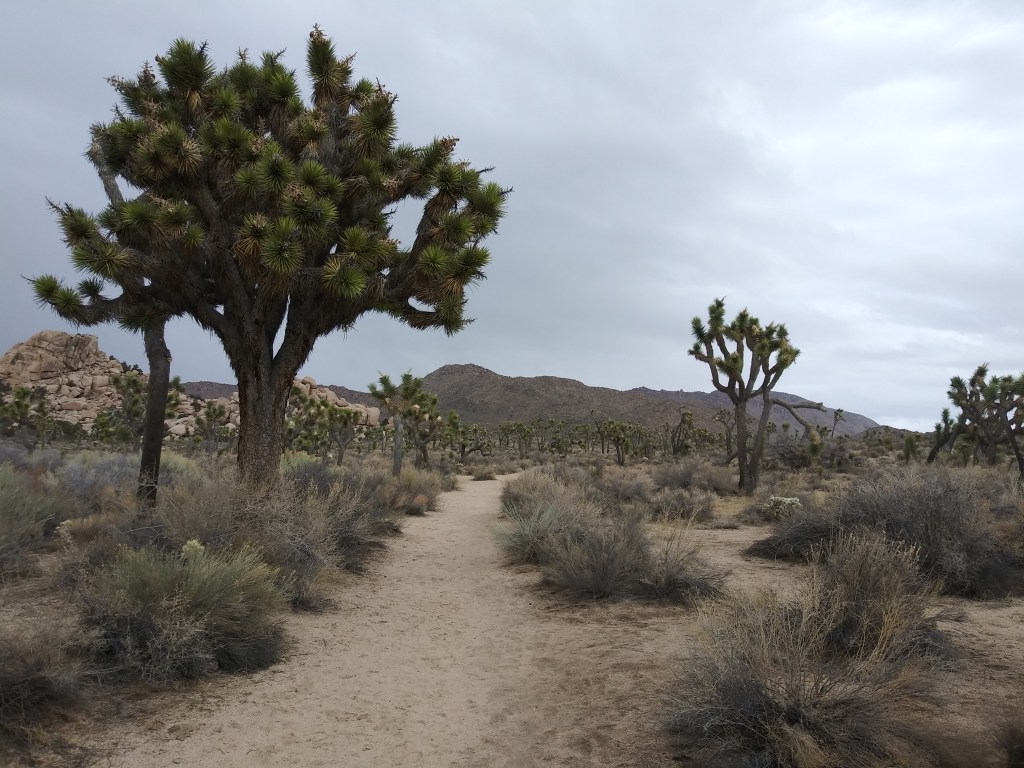
Shortly after beginning down the trail through the basin the trail will fork. Continue down the trail on the right of the fork to reach Wall Street Mill. the trail on the left at the fork will lead to the ruins of an abandoned ranch house, preserved antique vehicles, and the hike up to Wonderland Wash (another hike that i will covering in the future). The ruins and present here are worth checking out, but best left for the return trip. Keep your momentum and continue forward as there is plenty to see ahead at the mill to satisfy your curiosity.
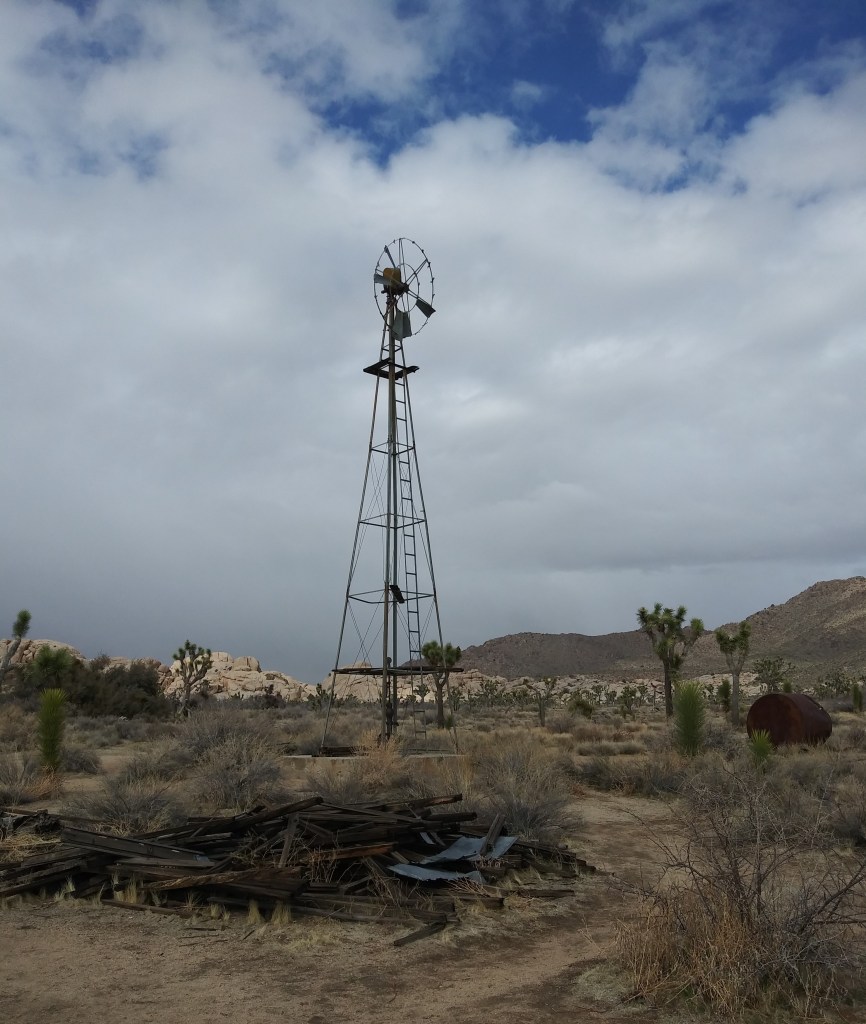
Shortly after the trail forks you will see the remains of an old windmill ahead on your right. Here is the first example of the high desert ecosystem’s preservation abilities. The windmill stands upright and functional to this day. While the metal used in the structure has surface oxidation, deterioration hasn’t gone beyond that point. Components are easily identifiable and continue to maintain their structural stability.
Beyond the windmill comes yet another of Wall Street Mill’s historical features in a rather unexpected form. At a simple bend in the trail you will find a small monument with an inscription that reads:
“Here is where,
Worth Bagley,
Bit the dust,
At the hand,
Of W.F. Keys,
May 11, 1943”
The story behind this monument is one that brings the spirit of the west alive despite taking place long after those days. In 1943 Bill keys and his neighbor Worth Bagley found themselves in a dispute over land use. A compromise was unlikely and events quickly escalated past the point of a petty neighborhood squabble. On May 11th, 1943 while Keys was tending to his property he was ambushed by Bagley and a gunfight ensued. When it was all over, Bagley lay dead, his blood spilled onto the dusty desert floor. Keys was convicted of murder and spent five years in San Quintin Prison before being pardoned when a judge determined that Keys had acted in self-defense.
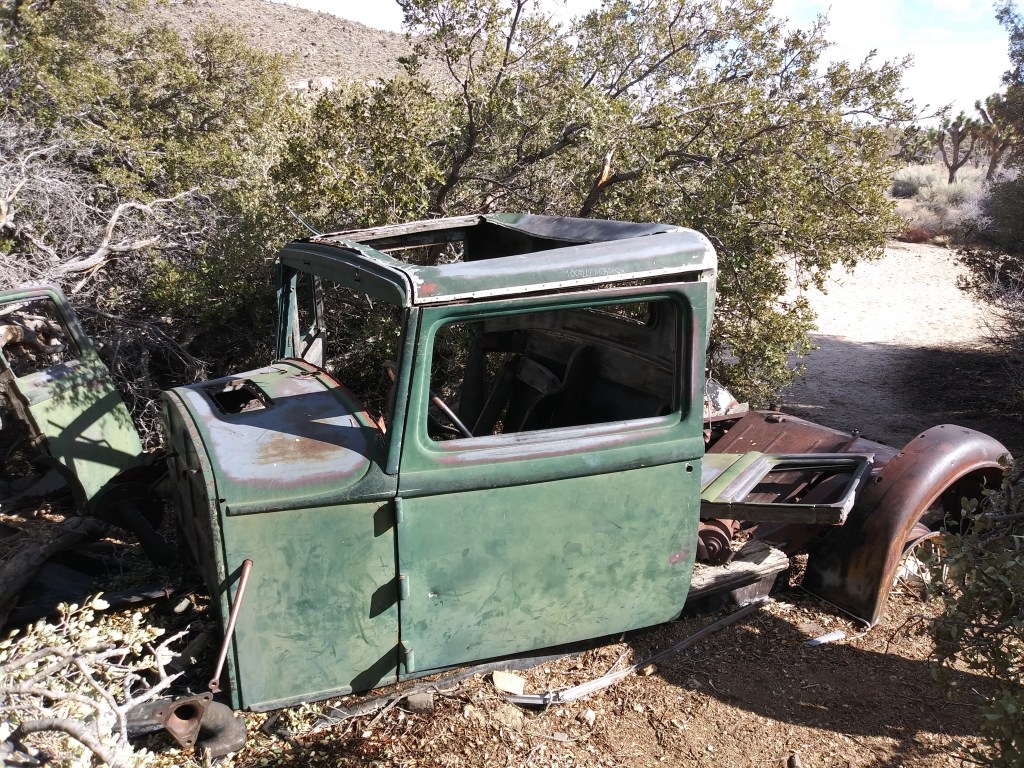
Wall Street Mill is now just ahead. As you approach you will begin to notice pieces of scrap metal along the trail on your right. The trail will lead you into an open area where multiple paths split. To your left will be a small hill where the processing mill is located, but it should be said that each one of the paths will lead you to a fascinating discovery in the immediate area. You will come across fantastic little rock scrambling paths, antique cars incredibly preserved by the desert conditions, and all sorts of relics from days past.
There is a sign that explains the methods used to process the gold ore along with a diagram of the mill. I recommend reading the sign to familiarize yourself with how the mill operated to get an idea of what you’re looking at. Walk around the left side of the mill to the top of the hill. Here you find yourself in the area where gold ore was loaded into carts and brought down into the mill.
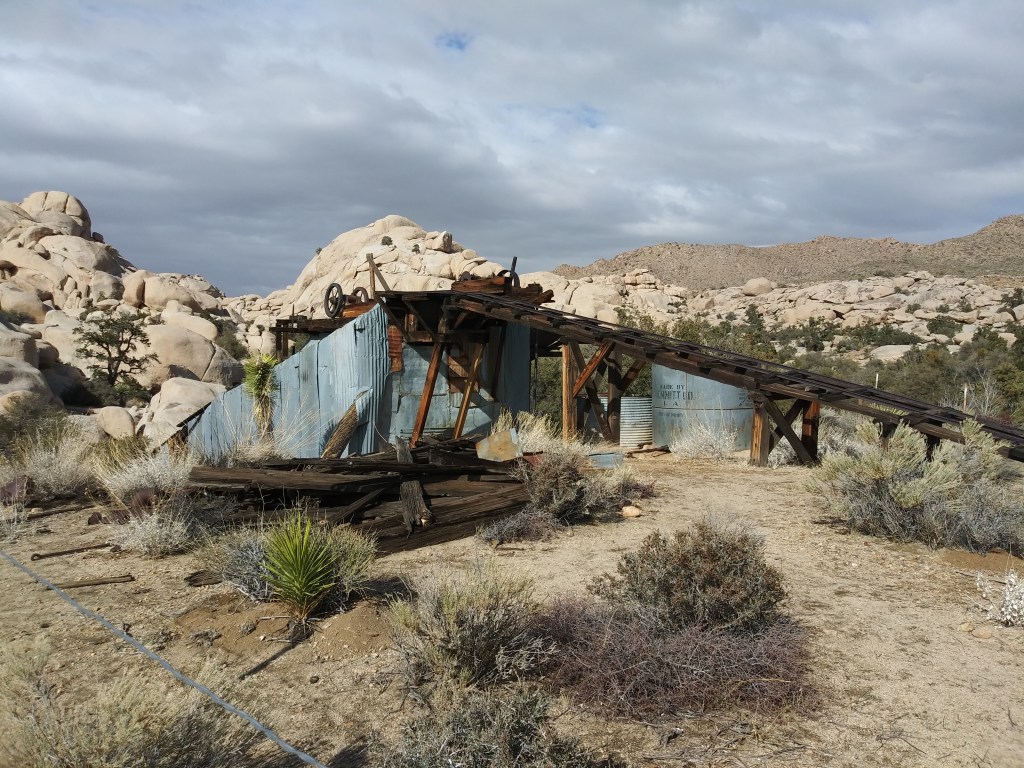
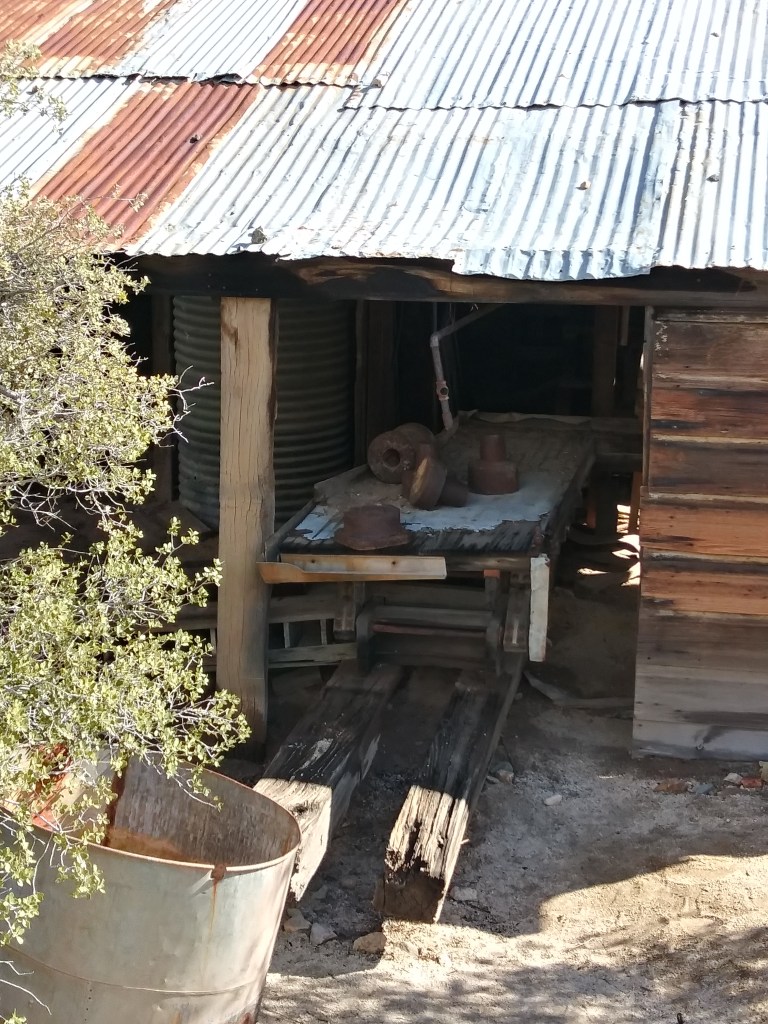
Walking down the hill along the side of the mill gives you an opportunity to see the mill up close and examine its many features in detail. You will see that even tools and equipment used in the mill’s operation still remain untouched.
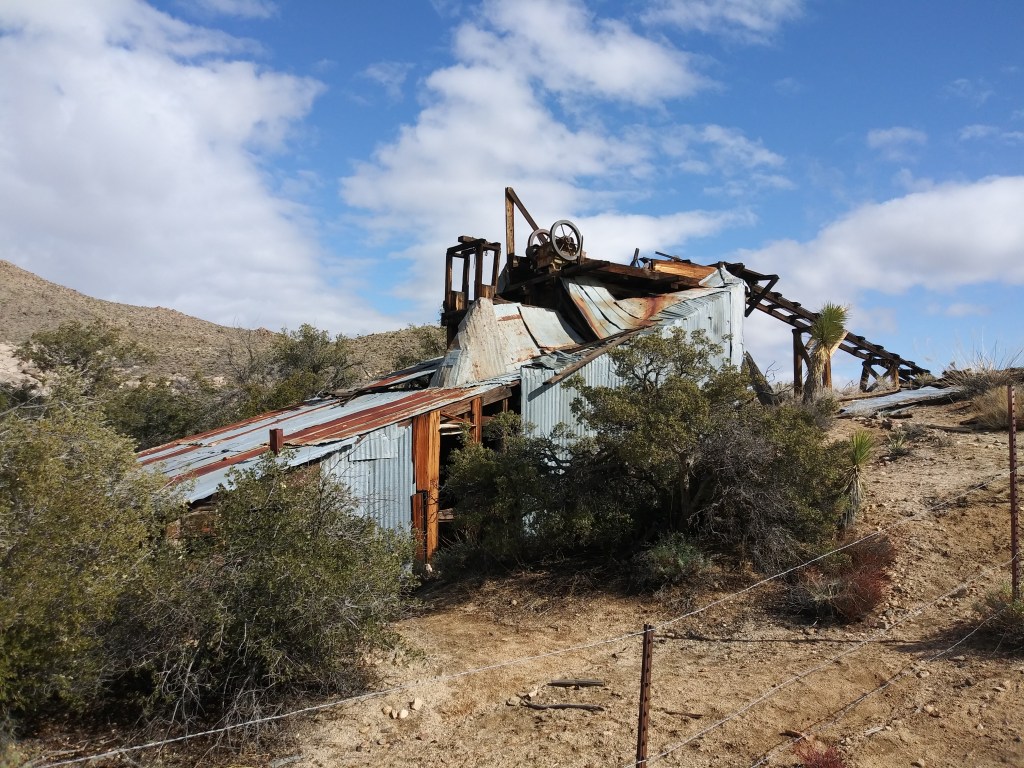
At the foot of the hill is where the process gold would exit the mill where you will be able to look into the mill and really inspect it’s inner workings.
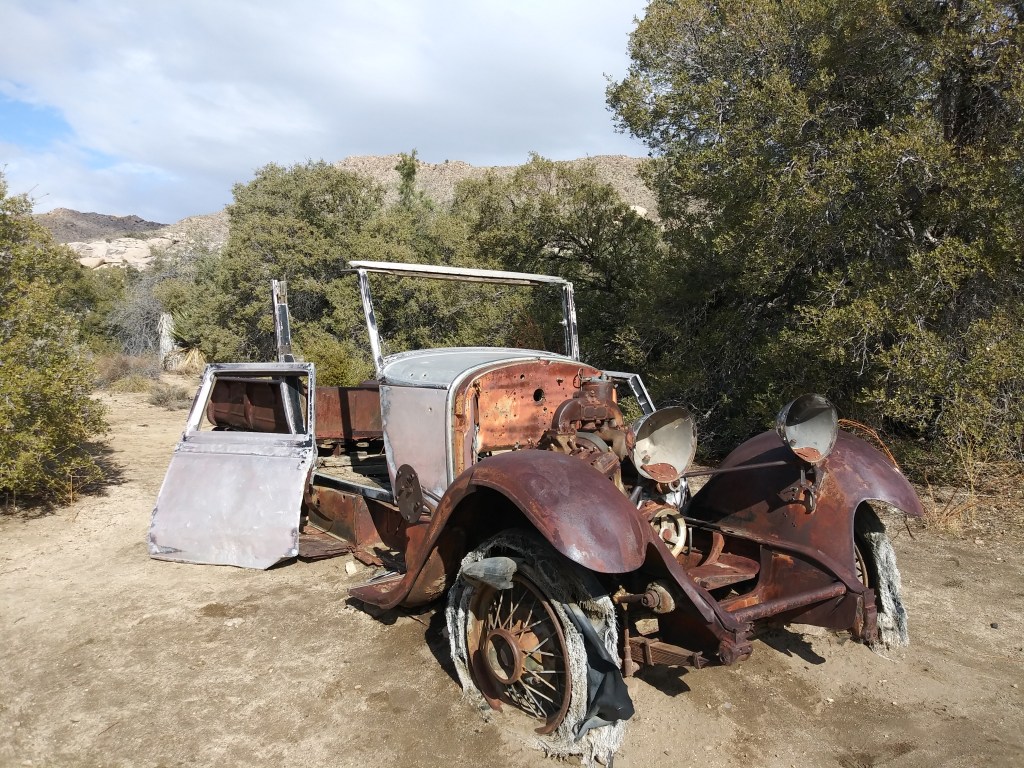
With the mill explored, venture down one of the many paths in the area and you will be amazed by what you find. Stay aware of your surroundings though, as it is easy to become a little disoriented. Along these paths are the footprints of the past. Cars from the 1930’s sit in the sun, aged but having their own form of beauty.
It is captivating to think of how Wall Street Mill was in its heyday. Men laboring in the harsh desert heat in search of a fortune. Feuds and shootouts between neighbors. These are things we expect from an old western movie, and yet here those things actually took place not too long ago.
When you have finished exploring leave the mill site on the trail you followed in. On the return trip you will have expansive views down the whole basin. With the surrounding mountains and the mouth of the basin visible far in the distance one can truly get a feel for how small we are in relation to the world around us.
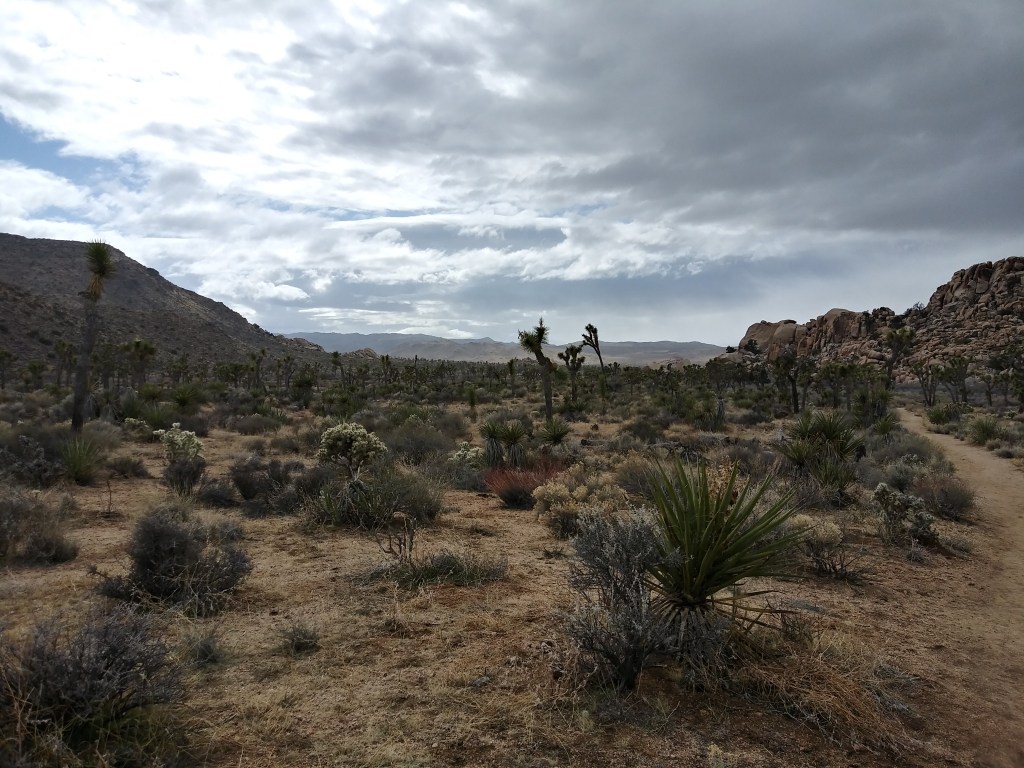
The hike to Wall Street mill will take you through a spectacular desert environment to a time long ago. The terrain is not challenging and anyone in good health could come along on the adventure if they are well prepared for the sun. Bring plenty of water as it likely won’t be available. This hike is truly an adventure like no other. If you plan to spend any time in Joshua Tree National Park its a hike you won’t want to miss.
 Wet Boots, Worn Packs, and Other Wonderful Things