It seems too obvious to say that extreme cold can be dangerous. Even with the slightest chill in the air, it’s not uncommon to hear someone say, “I’m freezing to death!”. Exaggerations aside, what exactly does it take to freeze to death? More importantly, how do we know when the exaggeration can become a reality? Hypothermia doesn’t set in all at once; suffice to say it compounds into what can ultimately become fatal. The body gives us many signs beforehand to alert us that we need to get out of the cold. Let’s look at the symptoms of hypothermia and how to address them.
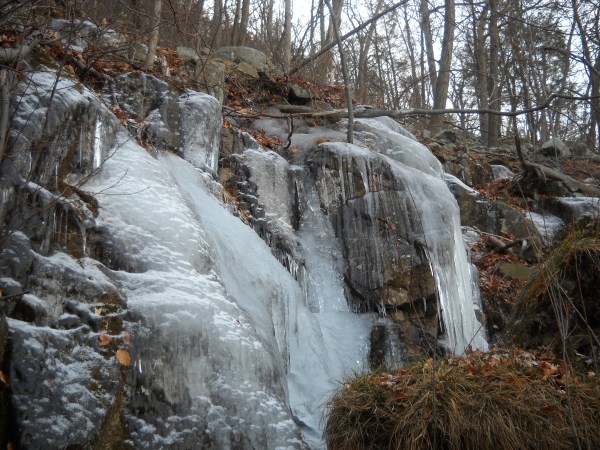
Medically speaking, hypothermia occurs when one’s body is unable to produce heat as quickly as it is losing it. The rate that the core body temperature drops at is determined by the temperature of the environment that said person is in; the lower the ambient temperature, the faster one’s body temperature will drop. The threshold for hypothermia is when the body’s temperature falls to 95F, just three degrees below the typical temperature of 98F. A decline in physical ability and cognitive function will set in, impairing one’s ability to operate both mentally and physically. If left untreated, the victim will lose consciousness and their body will slowly shut down, resulting in organ failure and death. A person exhibiting signs of hypothermia must be warmed as soon as possible. Necessary is insulating clothing, an external source of heat, and, preferably, shelter from the elements.
As one’s temperature begins to drop, the body will attempt to warm itself by shivering. Shivering is an involuntary response of the nervous system to produce muscle movement with the intention of increasing blood flow to the extremities and vital organs. Regarded as a harmless enough bodily event, the initial shivering is often excused as a minor discomfort. Despite the body’s best effort, shivering is not a sufficient method for generating heat and will do little to prevent temperature drop. If left unaddressed, the course of hypothermia will continue.
It is important to wear the proper clothing that will prevent body heat from escaping. Insulated garments are best when inactive, as the loft of the fibers traps the baseline body heat in the space between the internal and external layers of fabric. When active it is important to properly layer with a moisture-wicking base layer, a warm mid-layer (such as fleece or wool), and a wind/waterproof outer-layer. This allows one to add or remove layers depending upon the amount of heat they are generating. If a surplus of body heat is produced (such as when hiking or doing physical labor) and is unable to vent, sweating will occur. This will result in damp clothing that will be especially cold when activity ceases, increasing the individual’s susceptibility to hypothermia further. This is why fabrics like fleece and wool are optimal, as they wick moisture away from the body and dry quickly. Being able to add and remove layers allows for adjusting heat retention to maintain the proper temperature despite activity level.
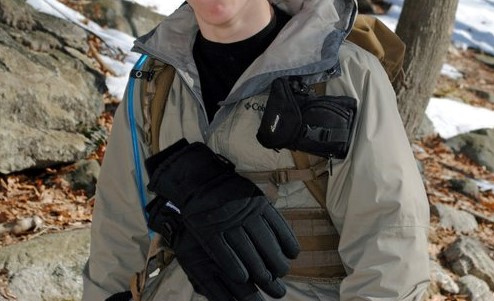
Equal in importance to insulation is protection from the wind. The term “wind chill” is the measure of how much body heat is being blown away from the body by air currents. Fleece breathes well while trapping body heat, but that is because air easily passes through it. Wind will penetrate the fleece and blow away the body heat that should be trapped in the loft of the fabric, making the insulating layer ineffective. A windproof outer layer will do well to protect against this. Exposed skin is particularly vulnerable to cold, dry air. As heat and moisture are removed from the skin it will tighten, split, and bleed. If this occurs on the hands, even the simplest tasks will be a painful and bloody affair (I can testify to that). Under extreme circumstances the tissue will die from the surface inwards, resulting in frostbite.
In addition to being windproof, outer layers must be waterproof. Not only is rain a threat, but snow on the body will eventually melt and soak just as much. Fabrics such as fleece and wool do insulate when wet, but their abilities to insulate are greatly diminished. If saturated, it is crucial that wet clothing is removed and the body dried as soon as possible. If boots become soaked under these conditions they must be removed and dried as well. If not, the cold combined with the moisture and lack of breathability will cause the flesh of the foot to soften, rot, and die over a period of time. An image search of the term “trench foot” will show you all that you need to know about the dangers of that. View at your own risk.
With proper clothing addressed, let’s move on to the condition itself. As stated earlier, at 95F the victim will be showing signs of hypothermia. Easily spotted signs include slurred speech, confusion, a lack of coordination, and drowsiness. It should be noted that these symptoms can be mistaken for intoxication, making consuming alcohol in extreme cold very dangerous. Not only can alcohol make symptoms of hypothermia more difficult to identify, but it also causes blood vessels to expand, which hastens heat loss through the skin. The old troupe of giving a freezing man whiskey is misguided at best. More difficult signs to identify are shallow breathing and a weak pulse. If hypothermia is suspected, it is important to take the potential victim’s vitals.
As hypothermia progresses the symptoms will become increasingly dangerous. The confusion involved can cause one to make poor assessments of their situation, leading to judgement that may put them in greater danger. The lack of coordination will make negotiating terrain difficult, increasing the risk of injury while attempting self-rescue.
It is when the drowsiness sets in that things become truly dire. The temptation to sleep will be strong, particularly when one is already exhausted from attempting to reach safety. Simply resting for a moment to take a short nap can lead to the colloquial “big sleep”. Once unconscious, the body will slow even further. Without the conscious will to live motivating the victim, it is all the more easy to slowly slip away from this world. Perhaps a peaceful end for a suffering individual, but one that should not be accepted prematurely.
Hypothermia is not a threat to only the outdoorsman. Every year people are trapped in their vehicles during blizzards. A summer night may involve a storm and a chill in the air. Hypothermia occupies a place in our minds where we know it’s a very real threat, but “will never happen to me.” Proper clothing and a bit of planning is all it takes to avoid hypothermia in most cases, yet they too often go ignored. As I write this, we are in the winter months and still have many more ahead. The outdoors has much to offer during this time of year, but take heed to the ever-present threat. Simple preparations and a bit of knowledge is all you need to be safe. Be sure to address those things.
Stay warm and keep your boots wet (but not those feet).
 Wet Boots, Worn Packs, and Other Wonderful Things