Stealth camping is the act of choosing your campsite based on your potential to remain unseen and leave minimal evidence of your time spent there. This is useful for hunters and trappers that may be observing hunting grounds and for those who simply prefer to have their privacy when in the bush. Successful stealth camping requires careful consideration of your surroundings, your conduct, your intent, and lastly, your adherence to local laws. Here, I will provide you with the information needed to properly choose a location, remain as concealed as possible, and follow certain precautions that must be taken.
The first and most important part is site selection. Ideally, the location will keep you out of sight and out of earshot from anything that may detect you. Typical site selection criteria such as access to clean water, drainage, exposure, and terrain apply as usual. While making an A-frame or lean-to out of surrounding trees and vegetation may seem like the ultimate concealment, those felled saplings create an out-of-place gap in the natural growth that is easily noticed (not to mention the process of felling trees, dragging them to camp, and then meticulously constructing a shelter draws quite a bit of attention).
The second thing to consider is your equipment and how it lends itself to your situation. A bright orange dome tent, a headlamp, or even an open flame from a backpacking stove may be seen from a significant distance away. Getting to your site may have you traversing an area that isn’t regularly traveled by those planning an extended stay. Be prepared for things such as rough terrain and animals that usually steer clear of trails. Packing only the bare-bones necessities will help to reduce the weight of your pack.
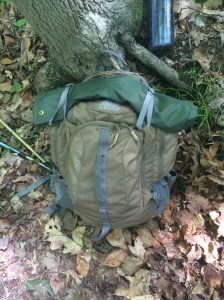
Lastly, how you conduct yourself plays a large part in your success. Every action has an environmental consequence. A campfire, stove, lantern, or headlamp is an obvious visual giveaway, while the constant opening and closing of zippers, fiddling with noisy objects like cookware, and talking are audible giveaways. Certain steps can be taken to mitigate these things: warmer clothing can replace a campfire, glow sticks inside of a sleeping bag can replace a lantern as a light source, and self-contained foods that do not require preparation (such as meal-replacement bars or M.R.E.’s) can replace cooked meals. Finally, using shelters that are small and subdued in color will conceal you more than a standard tent would. Minimizing activity within camp all-together is recommended. Move around your site only as needed, stay in your shelter/hunting blind, and try to keep all actions self-contained (at least that pee bottle will help keep you warm, right?).
I use stealth camping techniques to fully immerse myself in the environment or to avoid dealing with chatty neighboring campers. As such, I don’t follow the strictest of these rules; I put restrictions on myself, but I don’t mind venturing out at night wearing a headlamp (I rather not sleep with a pee bottle in my sleeping bag, thank you very much).
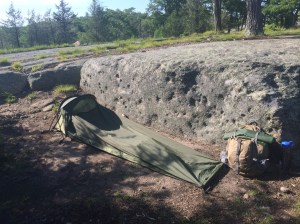
But even with less stringent requirements, you can still remain hidden. The picture below shows a stealth campsite I constructed. Note the rock formation to the right and the pine trees to the left. My bivy sack was nestled at an angle between the two behind the rocks.

I positioned the bivy sack so I could watch a small clearing in front of me (the only approach to the site) through a window from the comfort of my sleeping bag. This paid off, as just after midnight I woke up to four headlamps and hushed voices slowly creeping along a nearby trail. I was camping in a state park and following all laws pertaining to camping, as well as park rules, so I figured these four people weren’t park rangers looking to write me up for a violation. They seemed to be trying to be as quiet as possible, so it was likely not a search-and-rescue team out looking for someone. They meandered along, occasionally glancing with their headlamps in every direction as I quietly watched them. Slowly they passed, their footsteps faded, and after listening to my surroundings very closely, I was able to go back to sleep knowing they were none-the-wiser to my presence.
Stealth camping offers a certain amount of minimalist satisfaction that I enjoy. As mentioned above, it has some security advantages as well as some utility for hunters and trappers. But one thing must be said: these practices are not to be used for illegal camping on private lands, or illegal activities in general. Trespassing, especially setting up a dwelling while doing so, has serious legal consequences and you will likely be charged to the fullest extent of the law. Be aware that in some states a land owner has every right to approach you armed. How that armed land owner will handle the situation is up to them.
Do not put your freedom and life on the line to camp illegally.
As outdoor enthusiasts, we have a responsibility to keep our wild lands safe and protect the lives and properties of others. We must take steps so that anyone can come out to the wild and be safe from those with malicious intent. Report any illegal activities you may find to local or park authorities. Often times, emergency contact numbers for law enforcement agencies that operate within a park are posted at trail heads. Take a moment to save these numbers on your phone or write them in your field notes.
Keep yourself and others safe out there and keep your boots wet.
 Wet Boots, Worn Packs, and Other Wonderful Things